1981
I grew up in a seventies semi built on an apple orchard, at the edge of a market town on the North ridge of the Cheshire Plains. By '81, you'd find this ten year old lying in the back garden, binoculars glued to eyes, watching jet trails.
Dad — who literally lived his childhood in a house at the end of a runway — got me an airband radio. I'd scan the fat dial left and right, through spectrums where the giant airliners talked, sometimes to controllers, sometimes to each other. The first real American voices I'd heard back then, aside from ones on TV.
I'd spot Trans World 703, 1981's noon flight from Heathrow to New York. As it climbed over Northwest England, routing out to sea over the Wirral peninsula, they'd reach their initial cruise, so I'd see the contrails. I could tell a TriStar from a DC-10. The TriStar engines sat wider apart on the wings, so the three trails were broader. 747s were an easy spot, pushed on four great pillows of water vapour, and bigger than anything else in the sky.
Knowing differences visually was a satisfaction for me, not one I'd tell others, like I guess most things are now in the mid twenties. I think my generation tended to carry that know-how within, and that was enough. Sometimes the pilots would call Oceanic, a mythical control base in Shannon, Ireland. Could they really radio that far? A pilot would read out what seemed like ten minutes of waypoints on their flight plan. Coordinates, one after another. Meticulous. Mechanical.
Waypoints, waymarks. I think these words carry to today. My friend Dougald talks of times in our lives when we decide to abandon the big path, and have the courage — or simply face the necessity — to choose the small one. The one that goes into the forest and we're not quite sure where it will take us, but knowing the big path wasn't going the right way any more — and having some faith that following the small one will have meaning down the line. I've been doing that these recent years, and I'm ready to start telling a story again.
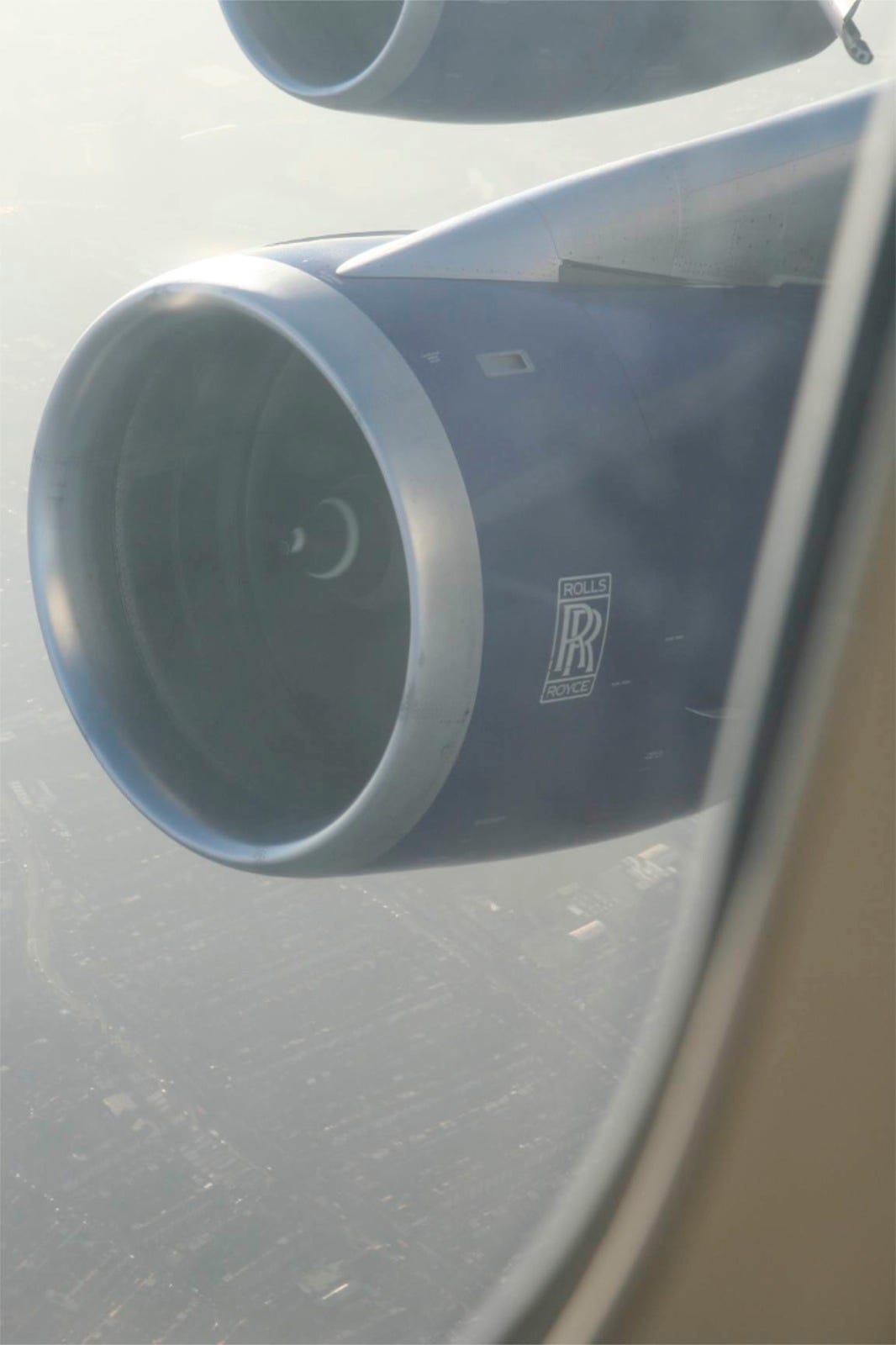
I've always loved the view from an airliner. I can sit an entire flight across the North Atlantic staring happily out the window. I used to — back in the 2000s, when I still drank, iPod on. And there are whole playlists of music I can relate to journeys. I remember flying to San Francisco on a 747, one sunny afternoon at the end of 2008. Well into the cruise, I was probably on my second gin, before the cabin crew got distracted rebooting the entertainment system, a principal job it seemed for British Airways cabin crew of that era. We've all played IT support for decades eh?
I remember we flew up the spine of Scotland and then out over the far Northwest Highlands and Islands into the open Atlantic. It was a beautiful day, and I was listening to Elgar's cello concerto, in the version performed by Jacqueline Dupré. My partner at the time had just learned his mother had multiple sclerosis — as did Dupré, taking her life very young. So it felt poignant. And the music flowed and I remember watching the sea smashing against rocks thirty thousand feet below me and I could watch and feel the coasts and the ocean and their tension in the sunlight with such intensity.
There is something astonishing about flying the Atlantic. It never ceases to excite me. The view down, the subtle changes in course and engine pitch, the sense of profound motion as the huge engines project a momentum to flight and the weight of the fuel is burned off and the plane goes faster and higher. The vulnerability and trust we must accept as we head out into and over a vast expanse.
These things are what I see and feel when I fly — not the poking about on a screen or bitching about the size of my pretzels. I just love the energy, the motion and interplay of the aircraft with the sky and the ground, the cloudscape, landscape, and the seascape. The day I finally pass from this life to the next, I hope someone who knows and loves me is flying on an airliner somewhere, because I'd like them to look out the window, put on some music, take it all in, and think of me.
again
Over The Water is my first new writing project for the mid twenties, after a break of some years. I hope to express fresh energy and perspective to you on a loosely regular basis as we cross this ocean of an era. My 'small path' has returned me to my roots in Northwest England, learning this past four years to live in the rhythms of nature in Cheshire, practising physical and manual routines and applying my mind and body while I can to understand how to tend and design gardens. Part involves studying horticulture, the science behind it all, but much is learning to work in the cycles of nature in ways I never contemplated or noticed before. With luck and faith, I hope to help others in the years to come to learn this craft, and play my part to transfer the skills between generations each side of me, not just here in the Northwest but in other places I haven't dared to fathom quite yet.
In this writing I'll weave together stories about gardens and things I'm seeing and learning, reflect on paths of migration from village to city and back, and describe communities and environments I spend time in and have experienced. I'll reflect on the collapse of modernity we are experiencing and the tears in a cultural fabric seven generations of people surrounding me had anchored themselves to, including — for those in the UK — the loss of our European identity and citizenship. But I also want to project a sense of hope that whatever we're passing across in this strangest of eras will have an end. Every ocean has another side to reach. And perhaps with others I can help forge a place on the other side where people can feel safe to land.
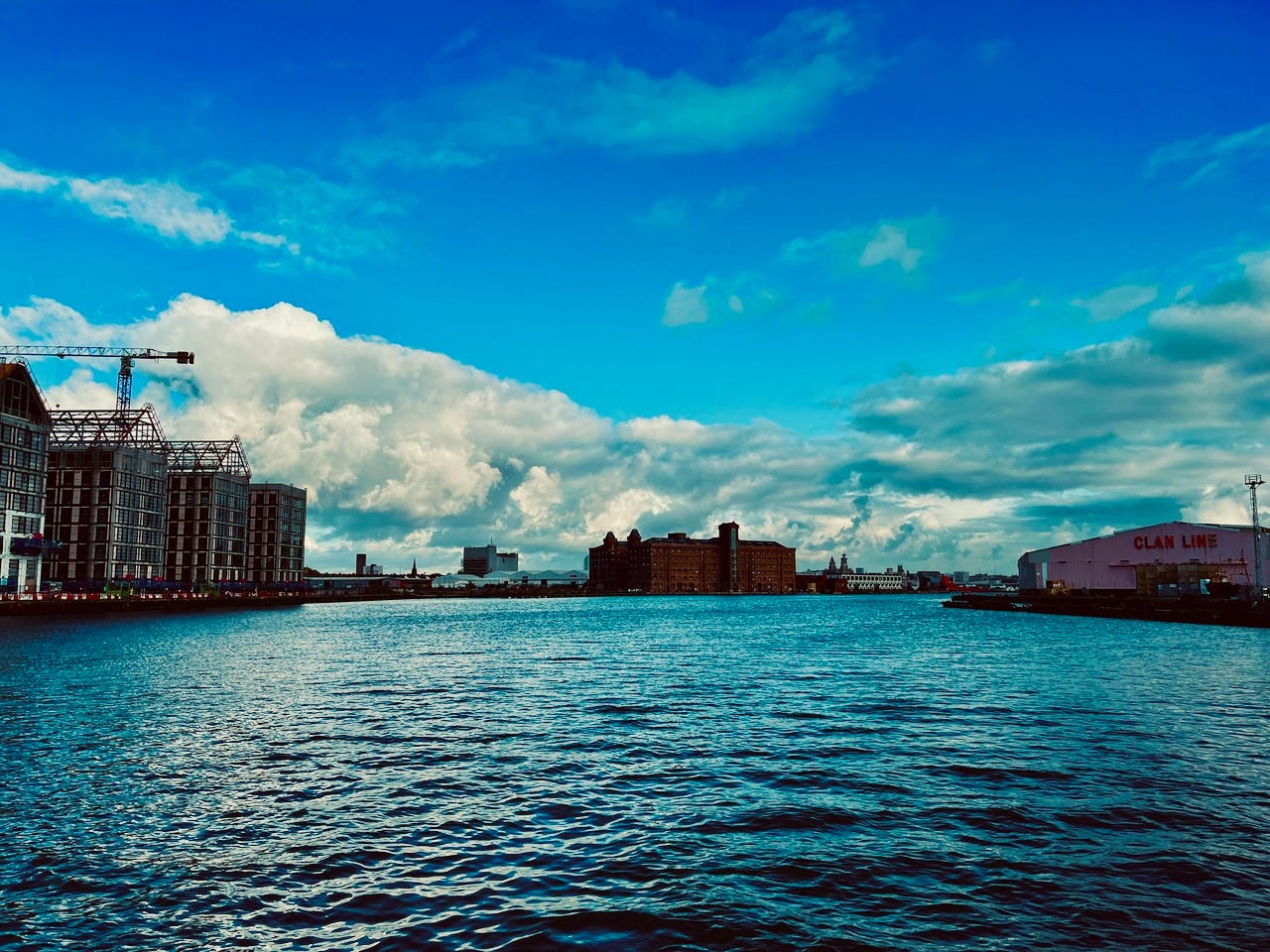
As I type, I'm overlooking my birthplace of Liverpool, surely Britain's iconic transatlantic port city. It's the close of a week when the surviving Beatles released perhaps one last song, called Now and Then. It's the song I've chosen to accompany this chapter — my first in a series of Songs to Overfly Birkenhead. It's been a stormy week in the UK, to follow a particularly stormy and violent month of world events. But I always find music anchors me, calms me. It's powered me ever since those days watching jets from my back garden, and over time I hope to put a lens to the power of something called song cycles as a way to navigate stories, feelings and trauma, dreams and memories. As a way of defining or even just imagining moments in our lives that we can return to, and reflect on — as we grow, struggle, hide, and find our way to mix the old meanings, loves and losses, with the new. Including those that return with new meaning, in different times.
I'm writing this for the magical people I've known in my life — past, present and future. And if you're passing overhead, with Birkenhead or Liverpool on that moving map, smile on down. I hope you enjoy the view — and the feeling.