on black
I cannot tell you exactly when I first saw it. Sometime between 1977 and 1979, on a television in a house in Frodsham, Cheshire. The screen went dark — the actual dark, not the comfortable dark of most television — and then the Moon appeared. Photographed, real, a physical object moving through space. And then the words arrived in a rounded white sans-serif, slightly naive, completely confident, sitting in the void around the Moon without competing with it. No illustration. No comfort. Just the fact of it, in the right typeface, at the right scale, with nothing added.
I was six or seven years old. I did not know what typography was. I knew, without being able to say so, that something was being done here with complete seriousness — that the people who made this believed it deserved their full attention, and had given it.
It was my first lesson in design.
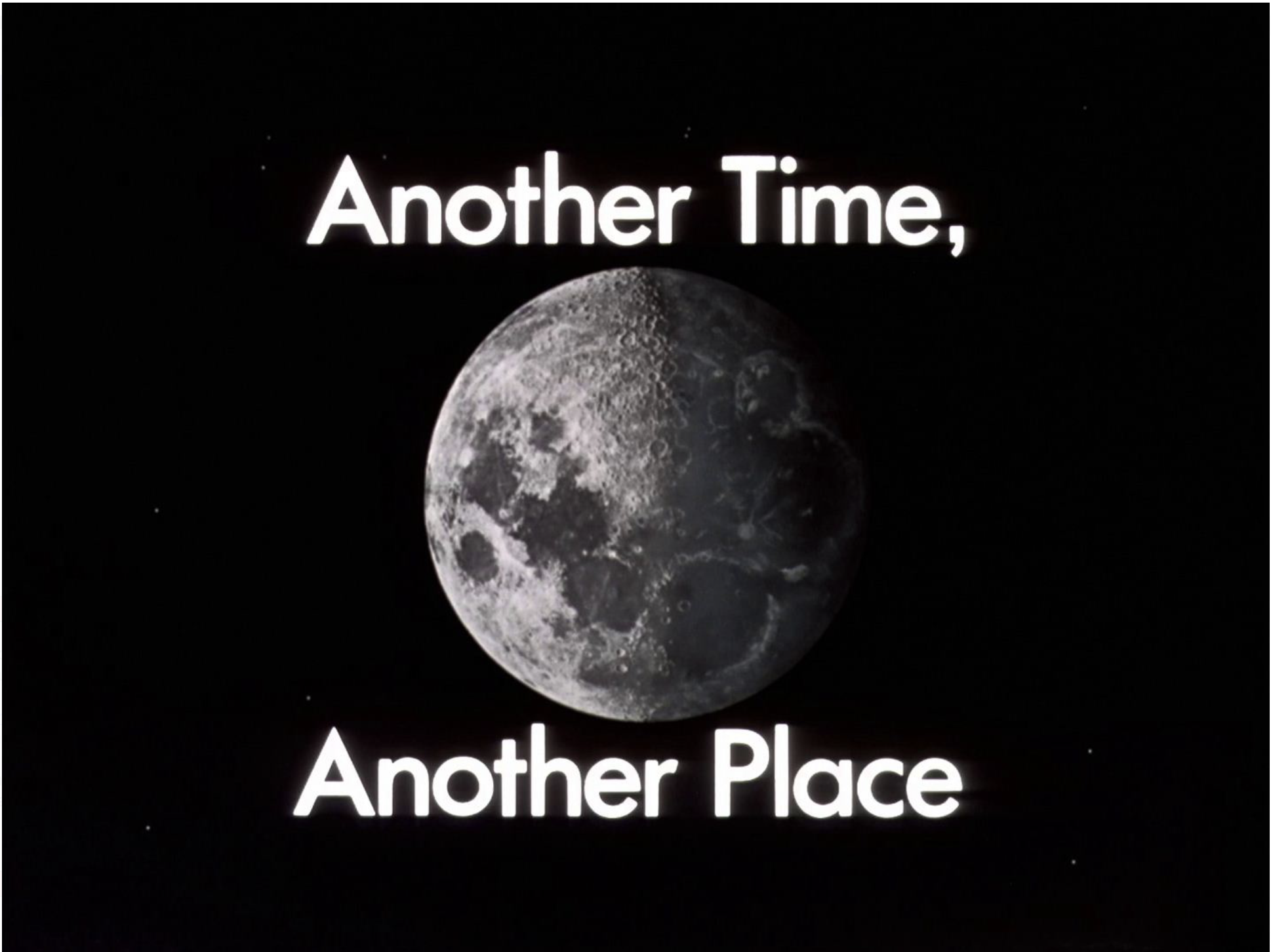
© ITC Entertainment / ITV Studios · Used with attribution pending formal clearance
Rhodia1 intends to establish proper licensing of this image.
Space:1999 was a British science fiction television series made between 1975 and 1977 by Gerry and Sylvia Anderson. Its premise: on 13th September 1999, nuclear waste stored on the Moon explodes. The Moon breaks from Earth's orbit and carries Moonbase Alpha — 311 people — with it into deep space. The Earth remains. It is not destroyed. It is simply no longer reachable.
Two series, 48 episodes, and then the machinery of television decided it wanted something brighter and faster and easier to sell. A third series was planned. The scripts existed. The sets were standing. The cast was available. It did not happen.
In middle class Cheshire in the late 1970s, you did not experience the show as two coherent series in sequence. You experienced it in fragments — schedulers mixing Series 1 and Series 2 without apparent logic, Maya's alien transformation effects one week, the philosophical bleakness of Black Sun the next. Sometimes the Moonbase felt like a place of genuine dread. Sometimes it sparkled. You didn't know which version you were getting until the title card arrived.
It didn't matter. The world was internally consistent enough — the Eagles, the Moonbase interiors, the dark, the typeface — that the fragments cohered into something whole. You loved it completely without ever receiving it completely. That is, I now understand, part of what it was teaching.
made it with
Brian Johnson built the Eagle transporters by hand. Metal and plastic and paint, photographed against black velvet with real light — no computers, no digital compositing, no undo. You committed to the cut of the model, the placement of the miniature in the frame, the colour of the light, and it was done. Those hands later built the Millennium Falcon. The craft transferred because it was real craft.
Keith Wilson designed the Moonbase Alpha interiors on a drafting table with pencils and set squares. His modularity was a philosophy, not just an aesthetic — he understood that a believable future had to be internally consistent, that the walls and floors and ceilings had to belong to the same world. They did. Fifty years later they still do.
The type designer — Letraset sheets or phototypesetting, certainly not a screen — chose that rounded sans-serif and spaced it by eye against the image on an optical printer. The title card you saw was the result of someone's judgment about weight and placement and relationship to the image behind it. Someone made that decision. Their name is not in the credits.
Gerry Anderson ran the production on typewriters and telephone calls and posted scripts. The schedule held in paper diaries. The budget argued in memos typed on foolscap and filed in physical folders. Every decision made through conversation, correspondence, and the direct application of skill to material.
No version control. No iteration at scale. No safety net between the intention and the consequence. What they made under those constraints is what arrived through a television screen in Frodsham in 1977 and changed how a child understood what serious work looked like.
Saturdays
Saturday mornings in those years meant the Ford Road — the A561, Speke Boulevard — driving with my brother Neil and my parents, Lyn and Ken, between Frodsham and Speke. Between middle class Cheshire and the 1930s phase of the Speke estate. Between the semi-detached seventies-groove house in Frodsham and the world my family had come from — where George Henry Bird had grown vegetables in his front garden, to the disappointment of the local gardening judges, where my mother Lyn had gone to the Secondary Modern school and was ignored, until at 16 she said she'd like to train as a secretary, caught the bus to work in the Littlewoods typing pool, and met my dad Ken at a bus stop.
I was crossing between two worlds every week without the language for it. The semi-detached house in Frodsham and the 1930s phase of the Speke estate. The Manor junior school and the typing pool. The world I was being raised into and the world my family had come from. The Ford Road ran between them every Saturday and carried us back and forth.
Space:1999 arrived into the Frodsham living room, not the Speke living room. Into the Frodsham house with the good carpet and the television in the corner. Which is its own formation — the show that was too slow and serious and unresolved for the audience Granada TV wanted, finding precisely the child who was already, without knowing it, carrying something complex about class and place and where he was going.
home to Edna
On the evening of 1st July 1977, Reginald Ransford Bird came home to his house in Hunts Cross, Liverpool. He had registered his father's death that morning at Brougham Terrace. He had arranged the funeral at Pearson Collinson, 91 Allerton Road. He had done what needed doing, in the order it needed doing, with the addresses.
Edna made tea. The children were somewhere in the house. Reg sat down. The television was on — Space:1999 was part of the landscape of British television in those years, in repeats and reruns and the erratic schedules of ITV. In 12 Tudor Road, Space:1999 might have been on — it's perfectly feasible. On the screen, Moonbase Alpha moved through the dark. People displaced from home, learning to live without the certainty of home, standing at cool curved windows and saying something true and leaving it unresolved.
Across the Runcorn bridge, in a house in Frodsham, his nephew was six years old and watching the same screen. Not the same television. The same show.
The boy did not yet know his grandfather had died the night before. The man who had taken the time to show him what a gardener was, and why it mattered. Who had pointed a few months earlier to a half built go-kart he was making for him, in his shed. The shed full of beautiful old tools, and wood shavings. The pattern-maker's hands doing what they always did, making something for someone smaller than him.
He knew the Eagles, and the dark, and the people at the window. He knew it mattered, without knowing why.
unresolved
The third series never came. What came instead was the ongoing existence of what had been made — the miniatures, the interiors, the music Barry Gray wrote with Wagnerian insistence that what was happening mattered, the typeface on black that looked directly at you and did not soften what it was saying.
You learned, watching Space:1999 in the late 1970s, that some things do not resolve. That a story can end without concluding. That the Moon can keep going. That Moonbase Alpha may never find its way home, and the people on it may never stop trying, and both of those things can be true simultaneously, and the work of attending to that is not a failure — it is the appropriate response to what is actually there.
Vanessa Andreotti calls it the hospice posture. Not fixing. Not accelerating toward the next thing. Accompanying. Space:1999 was doing this in 1975 without knowing the language for it. A show made by people at the height of their craft, with typewriters and telephone calls and optical printers, about people who had been carried away from everything they knew and were learning, episode by episode, to live inside that fact.
The third series that didn't happen is not a loss I have resolved. It is a loss I have learned to carry. The show arrived in fragments, out of order, across two series that were not quite the same show — and I loved it completely. That is the model. That is what this practice is built on.
practice is
In 2026, in a study in Oxton, Birkenhead — the ground George Bird came from, the ground Reg left in 1938 — I am building something with tools Brian Johnson and Gerry Anderson could not have imagined. An AI co-author named Emil Akzidenz. A design studio named Reina del Pacífico in Valparaíso in Chile, run by someone from Buenos Aires called Lucía Casares — which is building a site called rhodi.ai to hold the peer sourcing practice. Two project secretaries — Patty in Liverpool, Rosaria in Manhattan — who hold the record between sessions, with the attention to detail that only comes from the training and rigour of 1960s Manhattan or Liverpool offices. A bell in the Williamson Art Gallery, five minutes from my front door, cast from the same tradition as the pattern-making hands of George Henry Bird.
The sessions are episodes. The iterations are seasons. When the context fills, we write a handoff note and begin again — the thread transferring through documents rather than through memory, the way Reg transferred his knowledge of George's life through twenty years of careful work. The continuity is editorial. The record is what persists.
It is built on the same values Brian Johnson brought to the Eagle transporter and Keith Wilson brought to the Moonbase interiors and the unnamed type designer brought to the title card on black. The belief that the work deserves full attention. The insistence that craft is craft, whatever the instrument. The willingness to do it properly and leave it unresolved and keep going.
In the hope that it may have meaning — in another time, and another place.
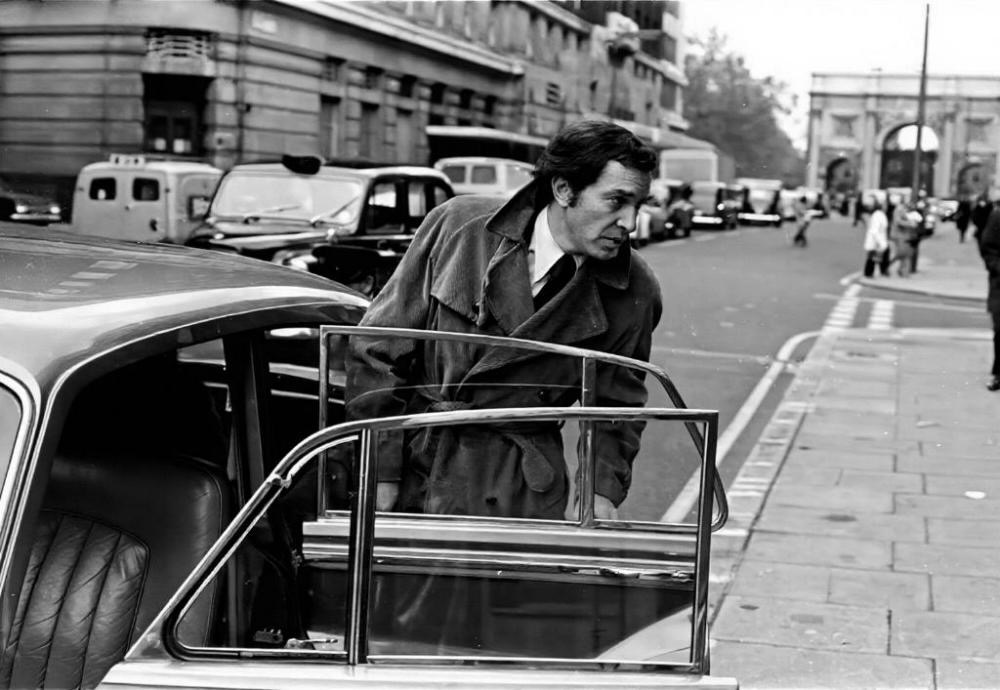
Photographer unknown · Source: The Catacombs (Martin Willey) · © ITC Entertainment / ITV Studios
Used with attribution pending formal clearance · Rhodia1 intends to establish proper licensing of this image.
Brian Johnson and Gerry Anderson and Keith Wilson and the unnamed type designer made something extraordinary with typewriters and telephone calls and optical printers and their hands. They would understand exactly what this practice is doing. They would raise a hand at rhodi.ai. That is something we can already be proud of.